Simplexity Robotics Delivers First 100 i7 Pro Robots, Marking a New Production Deployment for MCT’s Embodied Intelligence Product
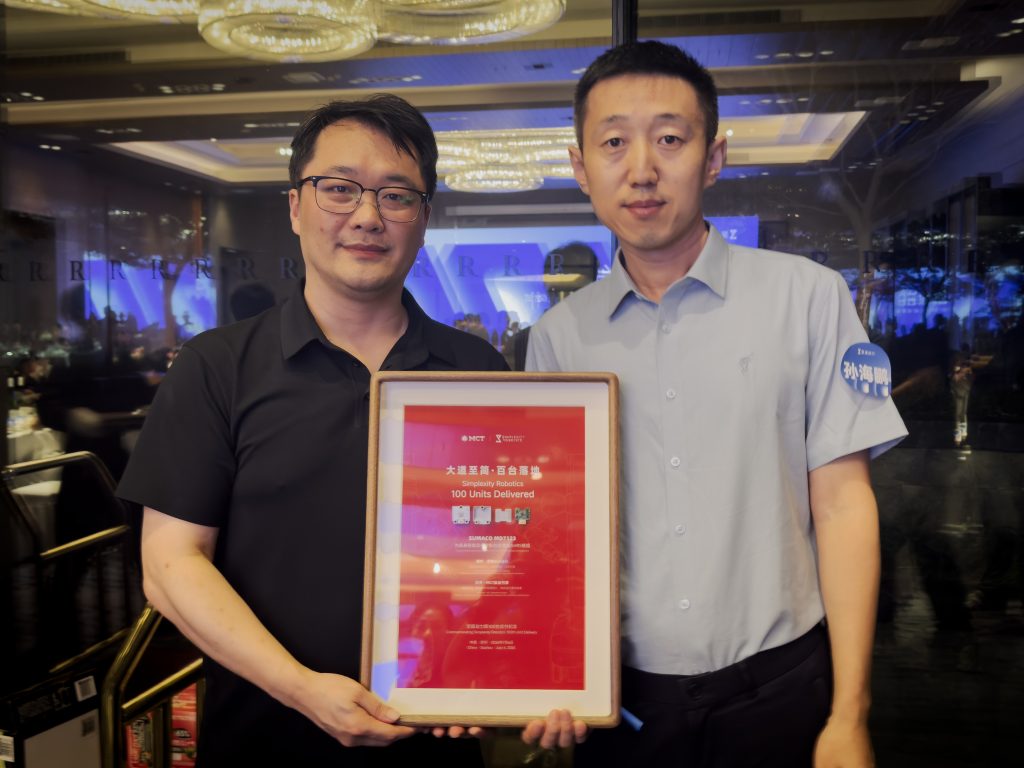
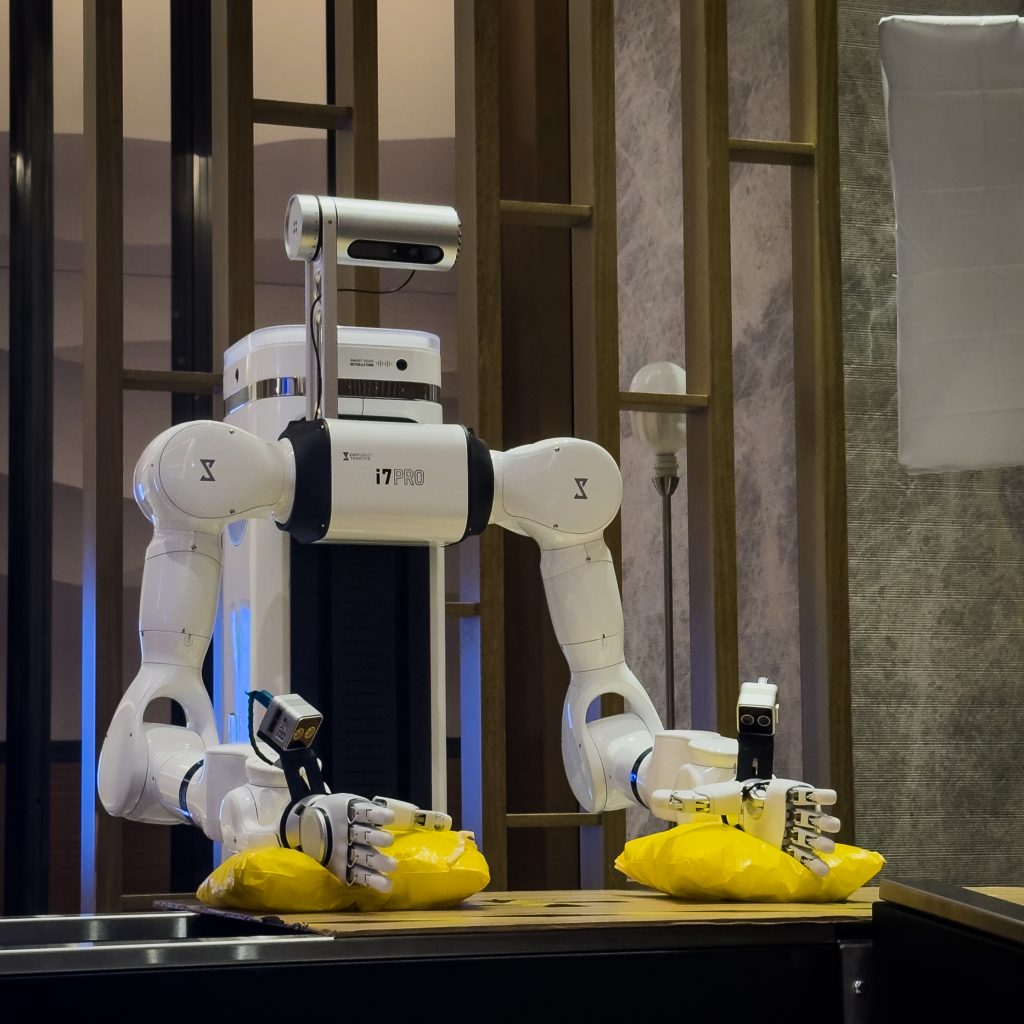
On July 6, Simplexity Robotics held its Scenario Deployment and 100-Unit Delivery Ceremony in Suzhou under the theme “Simplicity in Motion, 100 Units Delivered.” At the event, Simplexity Robotics announced the delivery of the first 100 units of its first all-scenario robot, the i7 Pro, and the completion of the world’s first CNC intelligent embodied robotics production line.
From technical validation and product definition to engineering-scale production and real-world deployment, the first 100-unit delivery of the i7 Pro marks a new stage in which industrial embodied intelligence is moving beyond laboratories and demonstration scenarios into real production lines and continuous operation environments.
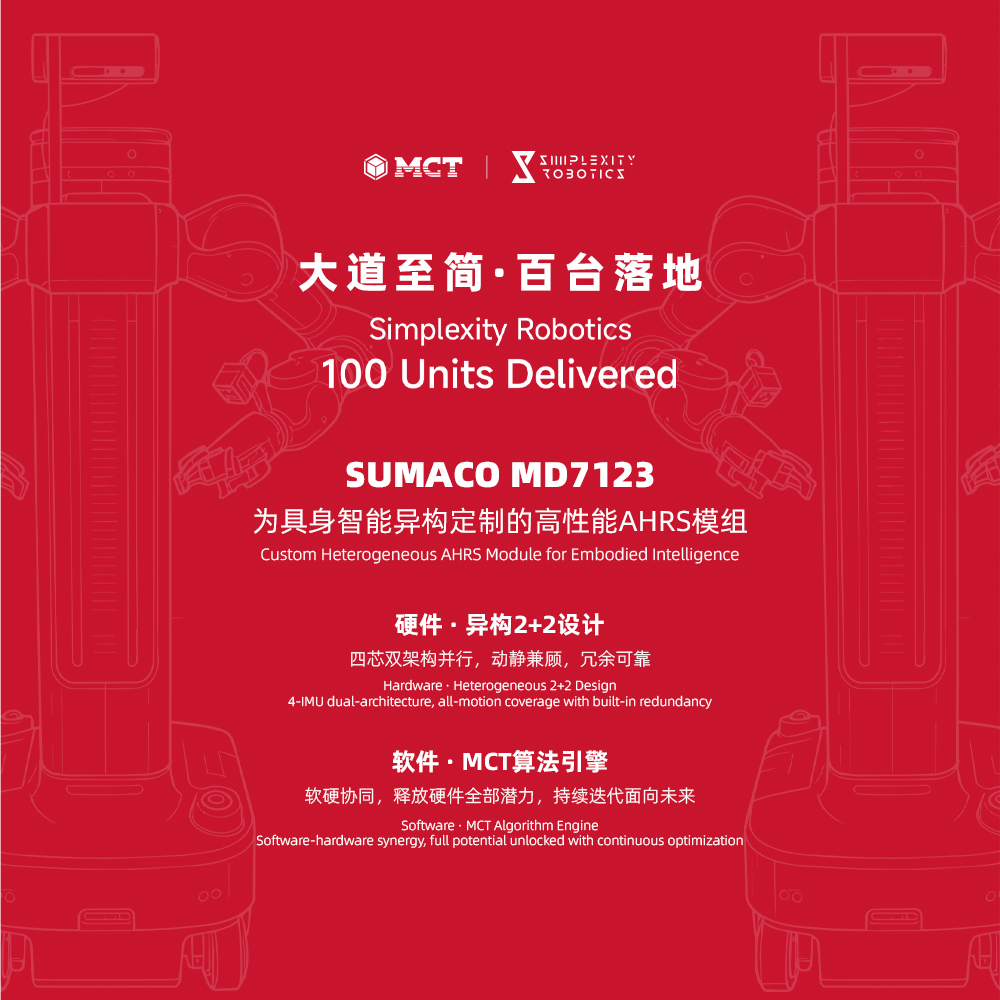
MCT was invited to attend the event as a partner of Simplexity Robotics, jointly witnessing this important milestone. The delivered i7 Pro robots are equipped with SUMACO MD7123, a high-performance AHRS module developed by MCT for embodied intelligence applications. With the first 100-unit delivery of the i7 Pro, MD7123 has also reached a new milestone in scaled production deployment.
For MCT, this collaboration represents another production deployment of its embodied intelligence product in an industrial embodied intelligence scenario. It further validates MCT’s product capabilities for real tasks, continuous operation and batch delivery.
For embodied intelligence to become industrially viable, it must ultimately prove itself through real-world scenarios, long-term operation and scalable delivery.
Designed for Robotic Motion on Real Production Lines
Industrial embodied intelligence faces scenarios far more complex than single-point demonstrations.
In real production environments such as CNC loading and unloading, robots need to perform autonomous movement, high-precision operations, continuous work and consistent multi-unit operation. They must respond quickly during dynamic movement while maintaining stable posture during fine manipulation. They also need to withstand impact, vibration and complex operating conditions while meeting factory requirements for safety, reliability and sustained operation.
Designed for real motion scenarios in embodied intelligence, MD7123 adopts a heterogeneous “2+2” hardware architecture, integrating four IMUs into a single module. Two sets of sensor architectures with different performance orientations work in parallel. Combined with the MCT algorithm engine, the module performs real-time fusion, cross-validation, consistency assessment and dynamic weight management on multi-source inertial data, enabling high dynamic response and precise attitude estimation to operate together on a single platform.
This is the core logic behind MD7123’s “all-motion coverage, zero compromise” and “heterogeneous redundancy, built-in safety.”
The two types of heterogeneous IMUs complement each other, providing stable and continuous inertial information for robot body attitude sensing, motion control and related fusion systems. As different sensor architectures respond differently to impact, vibration, noise and drift, the MCT algorithm engine can identify response differences across multiple data sources, providing the data and algorithmic foundation for anomaly detection, online calibration and degradation strategies.
Enabling robots to “know what they do not know” is essential to reliable operation.
Bringing Production-Ready Products into Industrial Embodied Intelligence Scenarios
Once core components enter real industrial scenarios, they are measured not only by performance specifications, but also by stable supply, flexible integration, long-term maintainability and continuous iteration.
With these requirements in mind, MD7123 was designed from the outset for performance, reliability and deliverability. It uses a heterogeneous device combination from different supply systems to strengthen supply-chain resilience, supporting its design objective of “dual-source supply, production-ready.” It also adopts a PIN2PIN-compatible design, leaving room for future device upgrades, performance optimization, cost adjustment and supply-chain switching, reflecting the long-term value of “PIN2PIN compatible, flexible integration.”
From heterogeneous hardware design and the MCT algorithm engine to dual-source supply and compatibility design, MD7123 reflects a complete product logic for real industrial embodied intelligence applications: heterogeneous hardware provides a multi-source sensing foundation, the algorithm engine enables fusion, validation and state management, and engineering-oriented design ensures readiness for real-world deployment and production delivery.
A product must be deliverable, maintainable and continuously upgradable to meet the demands of real industrial scenarios.
Building Native Infrastructure for the Physical AI Era
MD7123’s new milestone in scaled production deployment marks another important step for MCT’s embodied intelligence products as they continue to enter real industrial scenarios.
Driven by the needs of Physical AI, MCT will continue to follow its data-driven, hardware-software integrated approach. By bringing data acquisition and attitude sensing products into robot bodies and real tasks, MCT will help drive closed-loop iteration across data, models and hardware, and gradually build platform capabilities and an industrial ecosystem spanning data, chips, models and toolchains.
From product co-development to real production lines, MCT will continue to use production-ready products as carriers and real-world scenarios as entry points, enabling perception, data, models and hardware to form closed loops through continuous operation. Together with Simplexity Robotics and more industrial partners, MCT will keep advancing embodied intelligence into real-world applications, committed to becoming native infrastructure for the Physical AI era.