The Limits of Reliability | When Systems Learn to Heal Themselves

Prologue: Why Planes Don’t Fall Out of the Sky
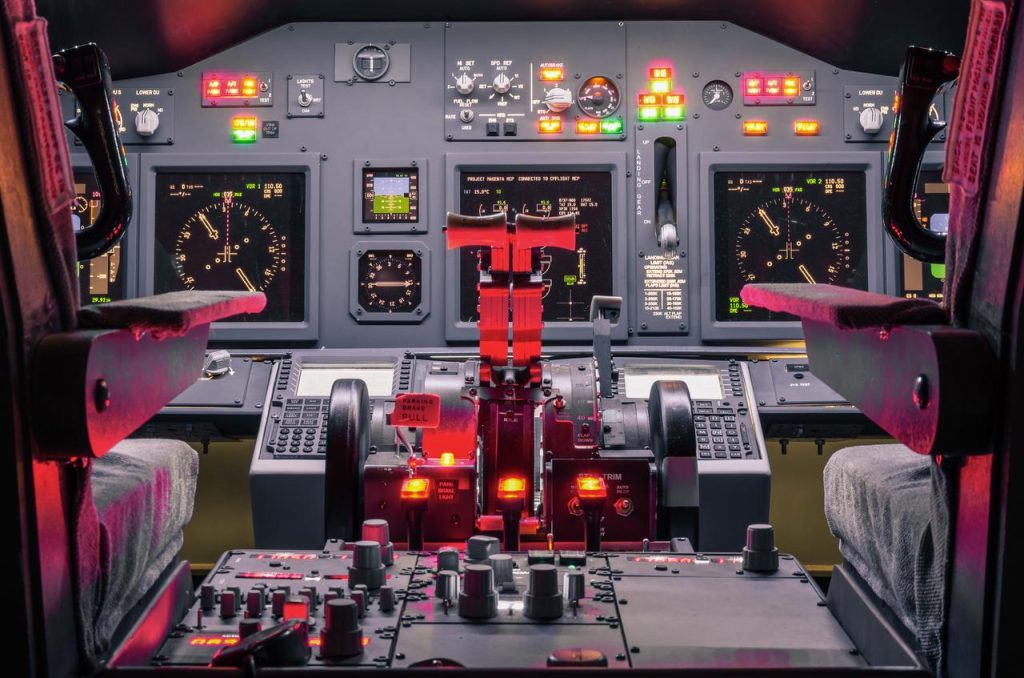
The flight control systems of modern commercial aircraft are extraordinarily complex.
They feature redundant power supplies, multiple bus architectures, redundant sensors, and backup control laws.
Even if a sensor fails, an engine shuts down, or a computer crashes, the aircraft continues to fly safely and stably.
This represents the highest standard of engineering reliability — not the elimination of failure, but survival in the face of failure.
In spatial intelligence systems, this is precisely the goal we pursue.
True reliability is not about never failing — it is about remaining correct even when something goes wrong.
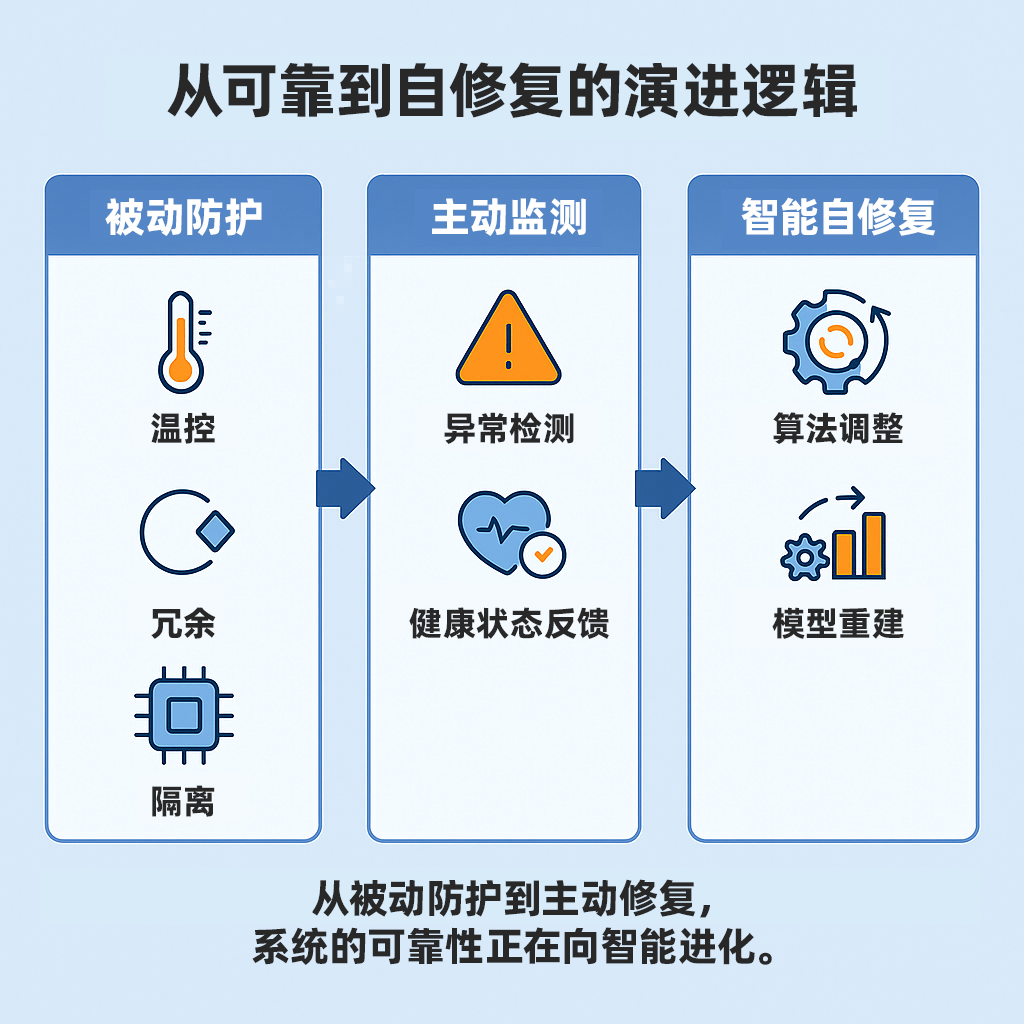
Layer One: Hardware That Endures
Reliability begins at the physical layer.
MCT’s chips and modules are designed to automotive-grade standards,
validated through rigorous endurance testing under extreme heat, humidity, vibration, and shock.
In the MOJANDA GNSS chip, the signal chain employs a multi-path isolation design to prevent single-point failures;
the SUMACO IMU module integrates built-in temperature compensation and anomaly monitoring,
maintaining stable output even under extreme environmental conditions.
Reliability is never just about being “tough” — it is about predictable failure modes. Only when a system understands how it will fail does it have the opportunity to become more resilient.
Layer Two: Algorithmic Self-Healing
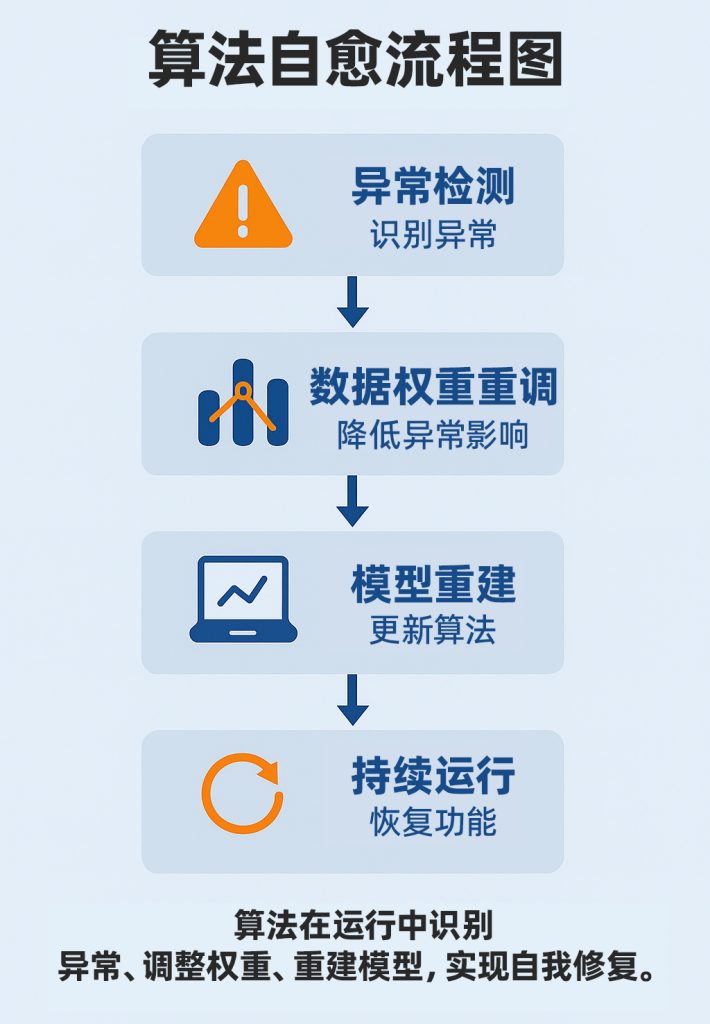
Hardware may fail, but algorithms must not panic.
The REVENTADOR fusion platform is equipped with self-aware state monitoring capabilities —
it can detect anomalous patterns in input data, dynamically reweight sources when a single input fails,
and even automatically reconstruct the solution model based on historical characteristics.
This is analogous to the human body activating its immune response after injury:
not an immediate recovery, but a gradual restoration of equilibrium.
In complex environments, this “algorithmic self-healing” keeps the system operating rationally and in an orderly manner.
Layer Three: System-Level Synergy
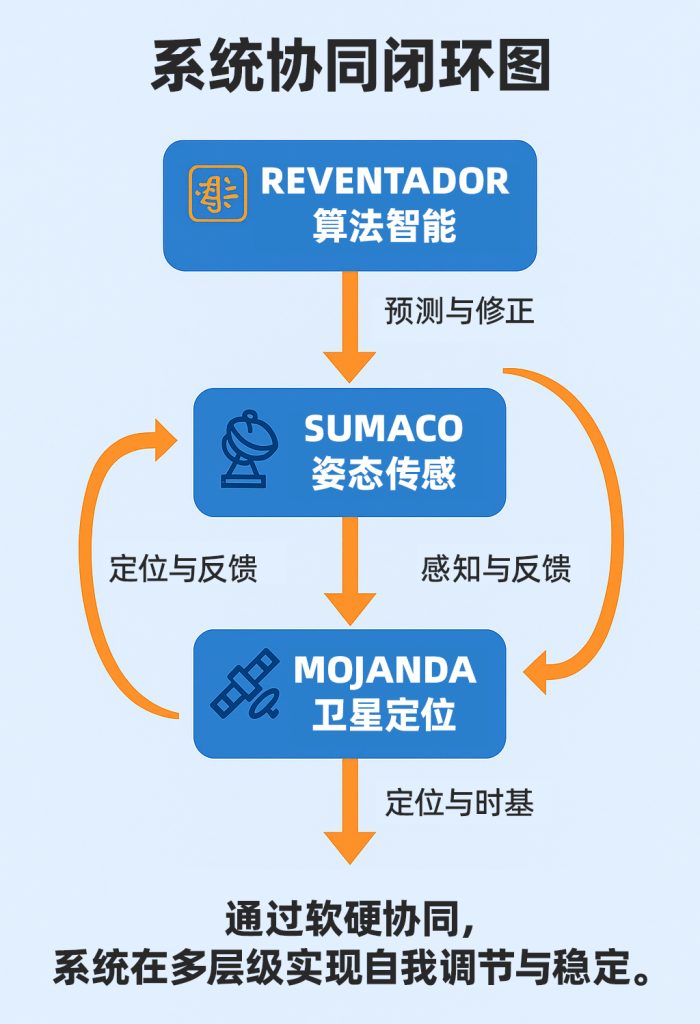
The reliability of any single module has its limits. True reliability emerges from system-level synergy.
Within MCT’s integrated hardware-software architecture,
MOJANDA provides the positioning foundation, SUMACO maintains continuous attitude estimation, and REVENTADOR performs multi-source sensor fusion —
the three forming a “self-balancing closed-loop ecosystem.”
When any layer fails, the system automatically invokes other modules to compensate and correct.
For example:
When GNSS signal is degraded, IMU takes over;
When IMU drift accumulates, GNSS and visual odometry provide corrections;
When environmental conditions are abnormal, the algorithm assesses the situation and rebuilds the weighting matrix.
This is the third level of reliability: autonomous system adaptation and collaborative stability.
Layer Four: Data Integrity
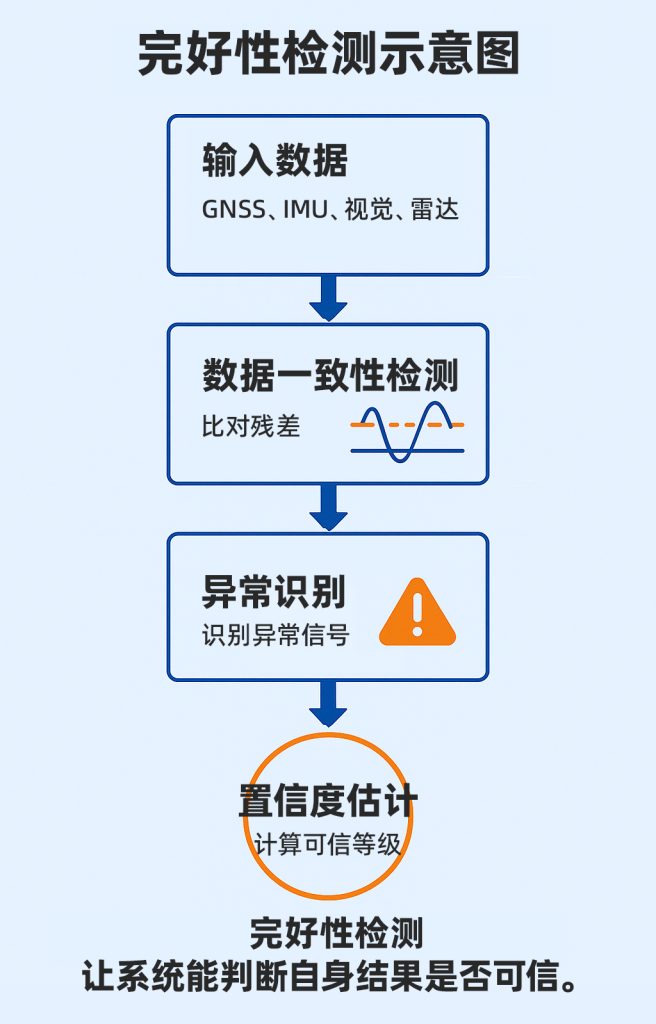
In engineering terms, “reliable” is not synonymous with “accurate.” A system can be highly precise yet unreliable; but a truly reliable system must possess data integrity.
The REVENTADOR platform includes a built-in integrity monitoring module:
it continuously evaluates the internal consistency of data, noise characteristics, and probabilistic bounds,
and triggers alerts and correction mechanisms the moment anomalous drift or abrupt changes are detected.
This capacity for “data self-reflection” means the system does not merely produce outputs — it can also assess whether those outputs can be trusted.
Looking ahead, this mechanism will evolve further into “confidence-level outputs” —
not only telling you “where you are,” but also “how confident I am in that answer.”
Layer Five: Ecosystem Evolution
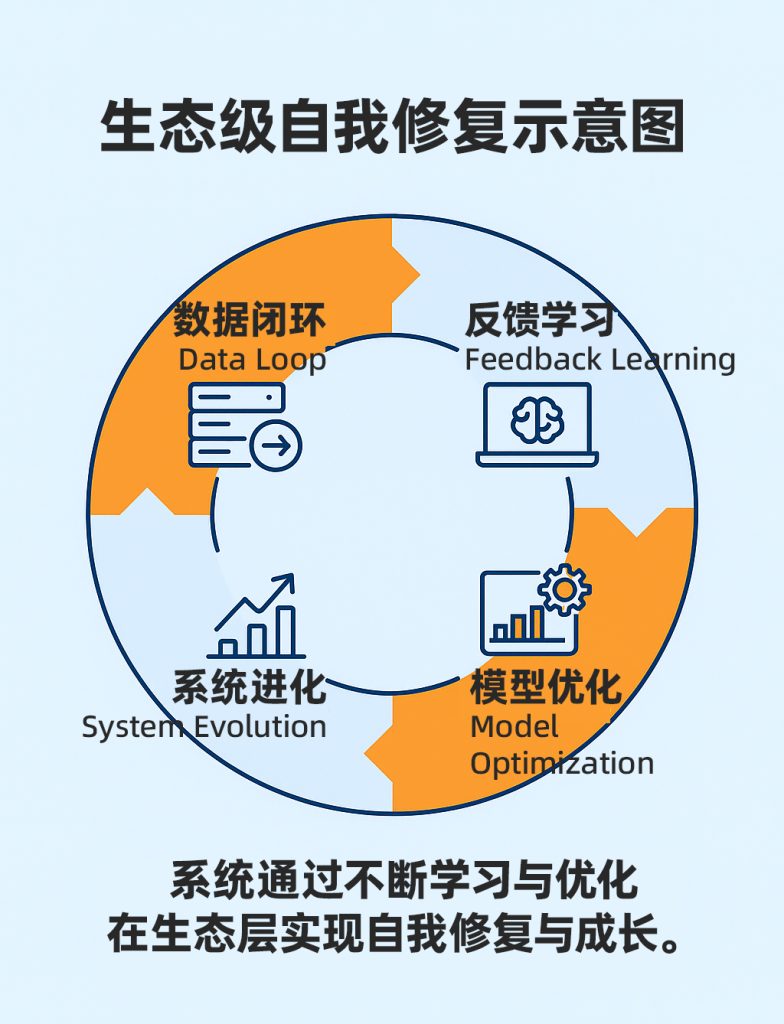
The ultimate expression of reliability is no longer a capability of any single product — it is a form of ecosystem-level collaborative behavior.
When GNSS, IMU, vision, LiDAR, HD maps, AI models, and other multi-source data form a closed loop,
the entire system begins to exhibit a kind of “vitality” — it can learn, evolve, and draw lessons from its own errors.
This is the embryonic form of “self-healing” in spatial intelligence systems.
It signals that future positioning systems will no longer be “static modules” but “dynamic living entities.”
Every anomaly becomes an opportunity to learn;
every recovery becomes an act of evolution.
Reliability is no longer a defense — it is growth.
Reflections and Outlook
The endpoint of reliability is not invincibility — it is resilience and self-awareness.
In the future, spatial intelligence systems will develop a “metacognitive layer” — the ability to understand their own uncertainty and proactively seek stability.
This will become a shared direction for automotive-grade systems, robotics, and embodied intelligence alike.
MCT’s mission is to build on a foundation of reliability — making intelligence interpretable, trustworthy, and sustainable.
Stability is not stillness — it is continuous dynamic equilibrium.
Further Reading
- NASA System Safety Handbook, Vol.2: System Safety Concepts
- Paul D. Groves:《Principles of GNSS, Inertial, and Multisensor Integrated Navigation Systems》
- Ross J. Anderson: Security Engineering: A Guide to Building Dependable Distributed Systems (Wiley, 3rd Edition, 2020)
About MCT
MCT is an innovative company focused on attitude sensing and absolute positioning for the Physical AI era. With artificial intelligence at our core, we follow a “data-driven, hardware-software integrated” strategy to develop and deliver comprehensive attitude sensing and absolute positioning solutions — serving the fields of embodied intelligence, urban assisted driving, low-altitude aviation, robotics, and smart devices. Built on our proprietary automotive-grade BeiDou high-precision chips and modules, and integrating high-precision IMU, vision, and LiDAR sensor technologies with large-scale data, MCT provides more reliable, safer, and more precise technical support for autonomous planning and automated control, continuously enhancing the spatial awareness capabilities of mobile platforms.
Want to learn more about MCT’s latest developments? Visit www.mctech.ai / www.mctai.cn, or follow our WeChat Official Account: 「毫厘智能 MCT」.