MCT Elected as Founding Council Member of Jiangsu Aerospace Industry Alliance
Physical AI is bringing intelligent systems into an ever-broader real world. Spatial intelligence is expanding beyond autonomous driving into embodied intelligence, low-altitude economy, satellite internet, and unmanned systems.
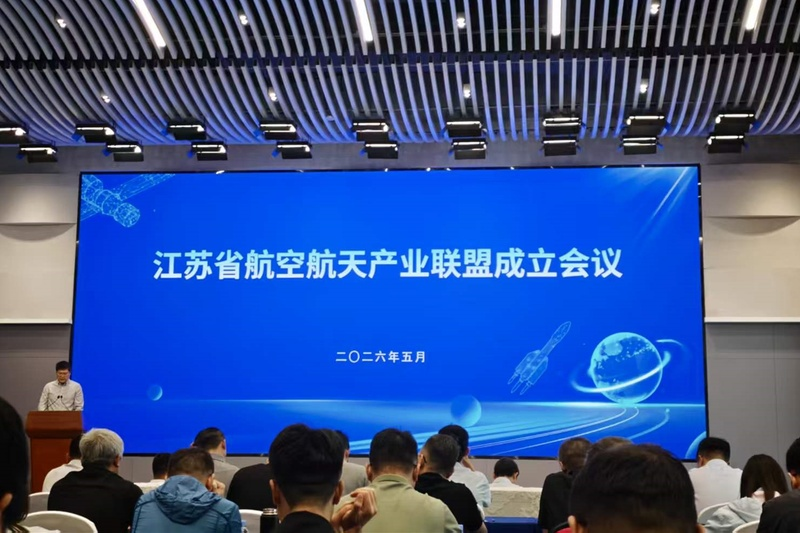
On May 26, the Jiangsu Aerospace Industry Alliance was officially established in Wuxi. MCT joined as a founding council member and will participate in collaborative innovation and applied deployment across the Jiangsu aerospace industrial chain, focusing on spatial intelligence chips, BeiDou high-precision positioning, inertial navigation, multi-source fusion perception, and large-scale mass production validation.
Being elected as a founding council member represents the recognition, trust, and expectation that the provincial industrial ecosystem places in MCT’s technology foundation, industry value, and future direction.
Joining the Jiangsu Aerospace Industry Collaboration Network
The aerospace industry is emerging as a key driver of new productive forces in Jiangsu’s development.
According to public reports, the Jiangsu Aerospace Industry Alliance is guided by the national strategies of building a strong manufacturing nation and a strong space nation. Rooted in Jiangsu’s existing aerospace industrial base, the Alliance integrates provincial industrial resources and focuses on core areas including large commercial aircraft, the low-altitude economy, commercial spaceflight, satellite communications, and space computing — advancing breakthroughs in critical core technologies, standards development, commercialization, and coordinated industrial development.
The Alliance has already brought together 44 enterprises across rocket manufacturing, launch services, satellite manufacturing, satellite payloads and components, ground equipment, and industry applications. It has also united leading universities and research institutions — including Nanjing University, Southeast University, and the Purple Mountain Laboratories — along with think tanks such as CCID Research Institute and China Academy of Information and Communications Technology (CAICT), as well as provincial high-tech investment funds and related industrial investment institutions, forming a coordinated ecosystem spanning industry, academia, research, application, and finance.
In 2025, Jiangsu’s aerospace industrial cluster — comprising 229 enterprises above designated size — achieved invoiced sales of RMB 55.981 billion, up 12.0% year-on-year. The commercial spaceflight sector has attracted more than 130 key enterprises, with total output value reaching approximately RMB 33 billion. Jiangsu has established a relatively complete industrial foundation across rocket manufacturing, satellite manufacturing, satellite payloads and components, ground equipment, and application services.
Jiangsu’s aerospace industry is moving from resource aggregation toward coordinated development, and from breakthroughs in key segments toward advancing the entire industrial chain. By joining the Alliance, MCT will forge closer connections with enterprises, universities, research institutions, scientific platforms, and investment organizations across the Jiangsu aerospace value chain.
Spatial Intelligence: Entering the Broader Stage of Physical AI
MCT is a high-tech innovation company deeply committed to the spatial intelligence domain in the era of Physical AI.
In the Physical AI era, for intelligent systems to move from the digital world into the real world, they must first understand the space they occupy: where they are, what their orientation is, how fast they are moving, and how they interact with the surrounding environment. Spatial intelligence bridges intelligent algorithms and the physical world, and determines whether an intelligent platform can operate reliably in complex environments.
Autonomous driving, embodied intelligence, the low-altitude economy, satellite internet, and unmanned systems each target different scenarios — yet all point to the same foundational question: how can a platform accurately determine its position and orientation within complex space, and sustain trusted, continuous motion.
This is precisely the direction MCT has been investing in for the long term.
Over the past several years, MCT has continuously built spatial intelligence solutions centered on BeiDou high-precision positioning, automotive-grade chips and modules, inertial navigation, multi-source fusion perception, and autonomous control support capabilities — completing technology validation and large-scale mass production verification in autonomous driving applications.
As a representative enterprise in Jiangsu with indigenous R&D and mass production capabilities for BeiDou high-precision positioning chips, MCT has built a systematic capability stack spanning chips, modules, inertial navigation, and fusion algorithms. The spatial intelligence capabilities validated in autonomous driving are now being extended into embodied intelligence, the low-altitude economy, satellite internet, and unmanned systems.
From automotive-grade autonomous driving to low-altitude and aerospace applications, the scenarios are evolving — and the demand for highly reliable spatial intelligence is becoming ever more clearly defined.
Targeting the Low-Altitude Economy and Satellite Internet: Capabilities Deployed in Real-World Scenarios
Jiangsu’s aerospace industry is accelerating the opening of new development frontiers. Public reports indicate that Jiangsu will continue to deepen policy guidance, strengthen innovation-driven development, improve the industrial ecosystem, and advance the opening of application scenarios in the low-altitude economy, communications, navigation, remote sensing, and computing — while exploring sustainable commercial models.
In response to this trajectory, MCT will leverage the Jiangsu Aerospace Industry Alliance platform to build closer ties with upstream and downstream enterprises, universities, research institutions, scientific platforms, and investment organizations — driving spatial intelligence capabilities into more concrete industrial scenarios.
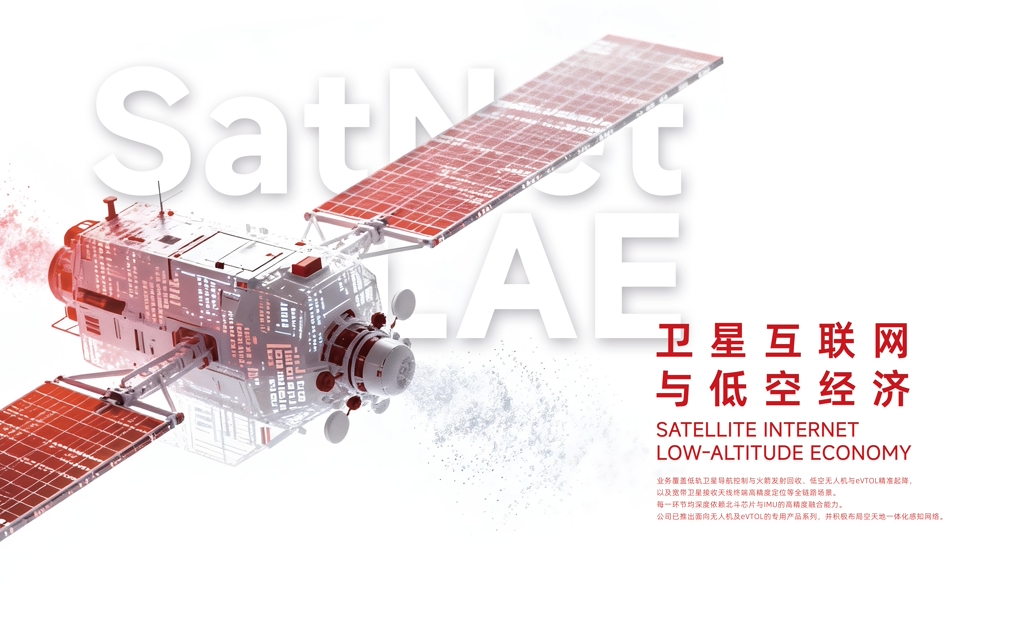
In the satellite internet and low-altitude economy domains, MCT has developed purpose-built solution capabilities centered on BeiDou high-precision positioning chips, IMU, inertial navigation, and fusion algorithms — targeting representative use cases including low-Earth orbit satellite navigation control and rocket launch recovery, precision takeoff and landing for low-altitude UAVs and eVTOL aircraft, and high-precision positioning for broadband satellite receiver antenna terminals. MCT is actively advancing productized applications for UAVs, eVTOL platforms, and satellite internet terminals.
These scenarios impose more stringent requirements on positioning, attitude determination, time synchronization, continuous navigation, and motion state estimation — and provide clear application entry points for MCT’s spatial intelligence capabilities.
Through the Alliance platform, MCT will engage in closer collaboration with industrial chain partners on scenario definition, technology adaptation, joint validation, and commercialization — driving spatial intelligence capabilities toward more deployable applications in the low-altitude economy and satellite internet domains.
From precision takeoff and landing for low-altitude aircraft, to high-precision positioning for satellite internet terminals, to integrated air-space-ground sensing networks — spatial intelligence is entering increasingly concrete and real-world industrial environments.
As Physical AI enters its next phase, MCT will continue bringing spatial intelligence capabilities to more real-world intelligent platforms — making position, attitude, time, and motion state perceptible, computable, and collaboratively actionable as industrial capabilities.
As a spatial intelligence company grown from Jiangsu’s local ecosystem, MCT will continue to uphold its philosophy of “data-driven, software-hardware integration” — leveraging solid technology foundations, long-term engineering investment, and forward-looking industry judgment to contribute to the high-quality development of Jiangsu’s aerospace industry and to support Jiangsu’s ambition of becoming a pioneering zone for commercial spaceflight innovation.
From ground-based intelligent mobility, to embodied intelligence and low-altitude coordinated operations, to integrated air-space applications — spatial intelligence is becoming a critical capability connecting the next generation of industrial scenarios. MCT will continue to advance at the forefront of this transformation.