Hardware-Software Deep Integration with Li Auto Halo OS: MCT Builds High-Reliability Attitude and Positioning Capabilities

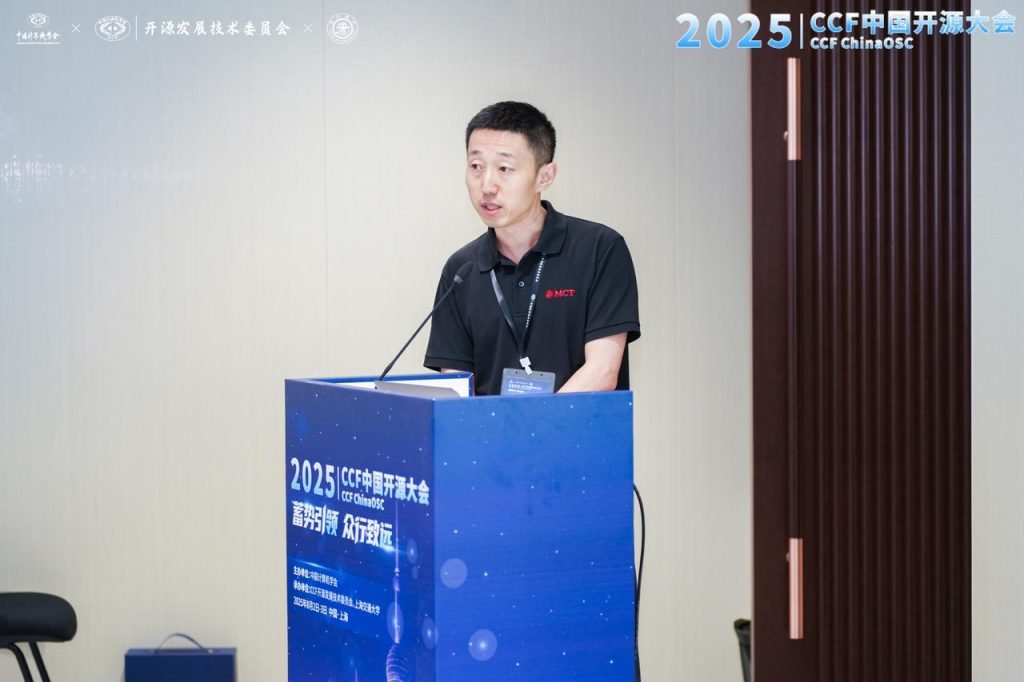
On August 3, 2025, MCT was invited to attend the 2025 CCF China Open Source Conference held in Shanghai, where it delivered a keynote address at the sub-forum “Open Source Empowerment: Automotive Design in the Era of Spatial Robotics,” hosted by Li Auto. As one of the inaugural ecosystem partners of Li Auto Halo OS, MCT Vice President Sun Haipeng presented a talk titled “Data-Driven, Hardware-Software Integration: Co-Building the Li Auto Halo OS Location SDK,” systematically outlining MCT’s technical approach and ecosystem value in delivering high-reliability attitude sensing and absolute positioning.
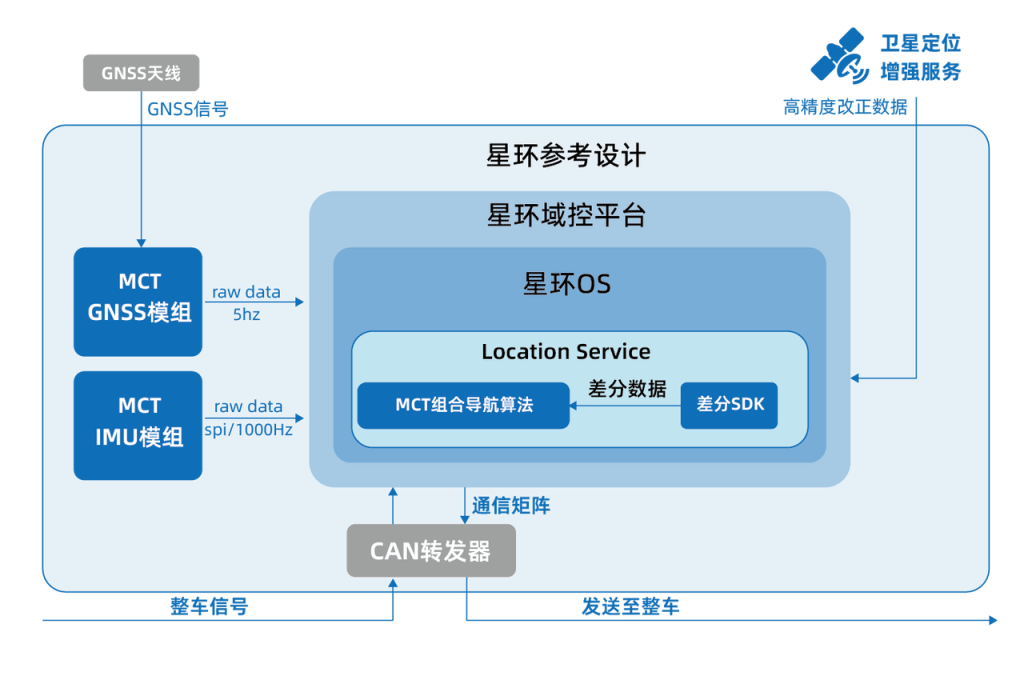
At the conference, Li Auto introduced its open-source automotive operating system, Li Auto Halo OS, which is building a collaborative ecosystem through an open architecture to attract broad participation from across the industry chain. As a core ecosystem partner, MCT has taken on the responsibility of standardizing the hardware and software for the Location SDK module, deeply integrating its proprietary automotive-grade GNSS chip module MOJANDA, automotive-grade IMU module SUMACO, and the REVENTADOR integrated navigation algorithm platform into the Li Auto Halo OS platform. This enables ecosystem partners to access unified, plug-and-play standardized module capabilities.
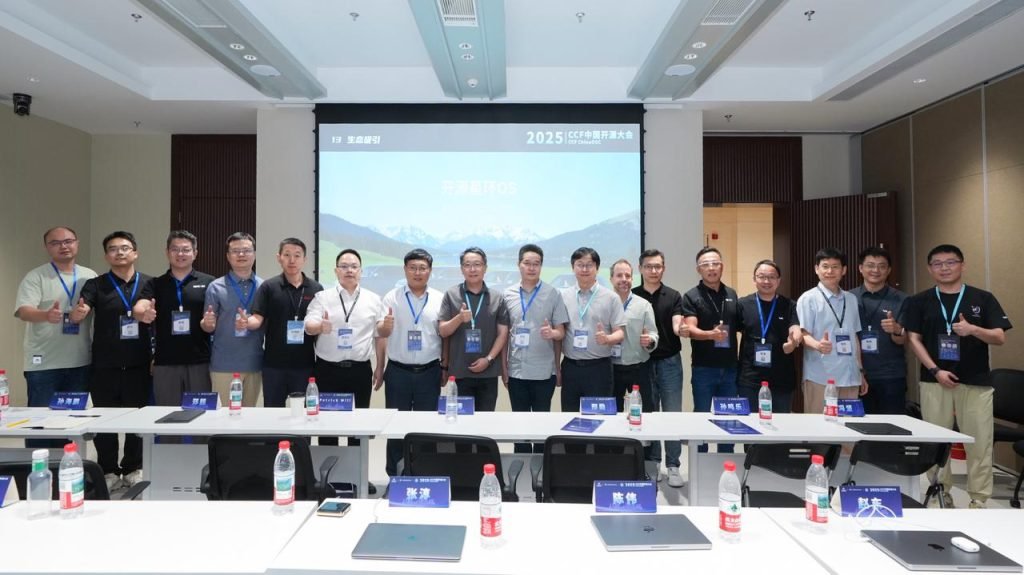
Building a High-Reliability Positioning Capability Framework for Complex Scenarios
In his presentation, Sun Haipeng noted that in the era of intelligence driven by VLA (Vision-Language-Action) large models, traditional single-technology spatial perception approaches are no longer sufficient to meet the demands of diverse and increasingly complex scenarios. Systems now place higher requirements on attitude sensing and absolute positioning — demanding not only precision, but also a high degree of reliability, stability, and rapid adaptability. In particular, in challenging environments such as urban overpasses, tunnels, and signal-obstructed areas, continuity and robustness have become critical factors determining overall system availability.
To address this, MCT has built a mass-deployment-ready attitude sensing and absolute positioning technology framework around the philosophy of “data-driven, hardware-software integration”:
- Hardware: The MOJANDA automotive-grade GNSS module supports full-band high-precision positioning with anti-interference capabilities, and is certified to AEC-Q100 and AEC-Q104 standards. The SUMACO automotive-grade IMU module supports functional safety, features a proprietary calibration system, and maintains stable output in dynamic environments.
- Algorithm: The REVENTADOR integrated navigation platform fuses GNSS/IMU data, combining AI-assisted filtering with dynamic strategy switching to significantly improve positioning continuity in complex urban scenarios — by 30% to 50%.
- Toolchain: MCT has developed a closed-loop development platform comprising the Ambae development kit, the Dempo algorithm tuning platform, and the Yasur simulation tool, establishing an end-to-end workflow from prototype development to mass-production validation — ensuring more efficient and reliable technology deployment.
These capabilities have been substantively integrated into the Li Auto Halo OS platform and packaged to mass-production standards.
Three Key Values Delivered to the Li Auto Halo OS Ecosystem
MCT’s automotive-grade attitude sensing and absolute positioning capabilities serve as a critical supporting module for the Li Auto Halo OS platform’s perception stack, providing vehicle manufacturers and ecosystem partners with a reliable, standardized, and efficient system solution across three key dimensions:
- Rapid Integration | 40% Reduction in Integration Cost
The modular SDK and Demo toolchain enable plug-and-play integration, simplifying complexity and accelerating onboarding — helping solution providers and OEMs reduce integration costs by 40%.
- Mass-Production Ready | 50% Improvement in Testing Efficiency
With support for OEM-specific adaptation, simulation co-validation, and automated road testing, testing efficiency is improved by up to 50%, enabling faster validation and more stable vehicle integration.
- Standardized Output | Adaptation Cycle Reduced to 1 Month
An integrated “develop-test-deploy” workflow compresses the full-vehicle adaptation cycle from 3 months down to 1 month, accelerating the path from prototype to mass production.

Building the Foundation for Platform Ecosystem Capabilities: MCT Advances Standardized Integration
MCT currently serves as the sole ecosystem partner for the “Location SDK” direction within the Li Auto Halo OS platform, and has fully completed the deep integration of its hardware and software capabilities into the Li Auto Halo OS system. The MOJANDA automotive-grade GNSS module and SUMACO automotive-grade IMU module serve as the platform’s recommended reference designs and, together with the REVENTADOR integrated navigation algorithm, form a unified perception capability module. This helps the platform establish a stable, reliable, and cross-scenario universal framework for attitude sensing and absolute positioning. The accompanying middleware interfaces and debugging toolchain have also been fully adapted and validated against Li Auto Halo OS system standards, providing developers with a complete pathway from embedded access to system integration.
In support of Li Auto Halo OS’s engineering efforts toward capability standardization and toolchain development, MCT is actively advancing interface-level openness and toolchain adaptation across its own modules:
- The first phase focuses on “gray-box open-sourcing” of the INS integrated navigation algorithm — packaging the core algorithm as a library while exposing adaptation interfaces and API documentation. This preserves capability security while improving system usability.
- In alignment with ecosystem requirements, MCT will progressively roll out gray-box output for GNSS capabilities in phases, continuously enhancing compatibility with multi-terminal spatial intelligence devices. Through this gray-box open-source model, MCT provides developers with efficient, secure, and reusable capability modules that significantly lower the integration barrier and accelerate ecosystem deployment.
- In parallel, MCT is advancing the adaptation and opening of the Ambae development kit, the Dempo algorithm tuning platform, and the Yasur simulation tool, providing developers with comprehensive toolchain support spanning algorithm integration, tuning, and validation — building ecosystem infrastructure that is standardized, reusable, and ready for large-scale deployment.
Looking ahead, as Li Auto Halo OS expands toward a diverse range of “spatial robotics” applications, MCT will continue to deepen the standardization of attitude sensing and absolute positioning, consistently delivering reliable, high-performance, and easily scalable spatial intelligence solutions through full-stack automotive-grade technical capabilities — jointly advancing the development of intelligent ecosystem infrastructure for the AI era and building a more open, collaborative spatial intelligence future.